



Avoiding plastic fashion is especially important if you’re talking about the items that sit right next to your moist, delicate skin: socks, underwear, bras, tights, and workout leggings.
So it’s ironic that it’s these exact product categories that almost always contain a bit of elastane (a.k.a Spandex or Lycra).
All tights contain nylon and spandex. Most socks contain between 20 and 50% synthetics, most leggings usually have between 6 and 12% elastane, cotton undies usually contain between 5 and 10% stretch, and sports bras usually have even more.
There are some 100% natural fashion brands, but they traffic mainly in t-shirts and sweats. You know, loose-fitting items.
Why is this? Well, with synthetics, brands incorporate them usually one of two reasons:
a. Synthetics are cheaper, or
b. Synthetics are higher performance.
In this case, it’s option B.
Synthetics give stretch, they give support, they give sexy. They keep your panties from sagging, your boobs from bouncing, your butt lifted, your underthings well-fitted, your leggings from developing holes, and your socks from wearing out.
Hell, my busty readers have made it clear that even the 92% natural sports bras are not up to the challenge of a good jog. The supportive natural sports bra really does remain the holy grail of this community.
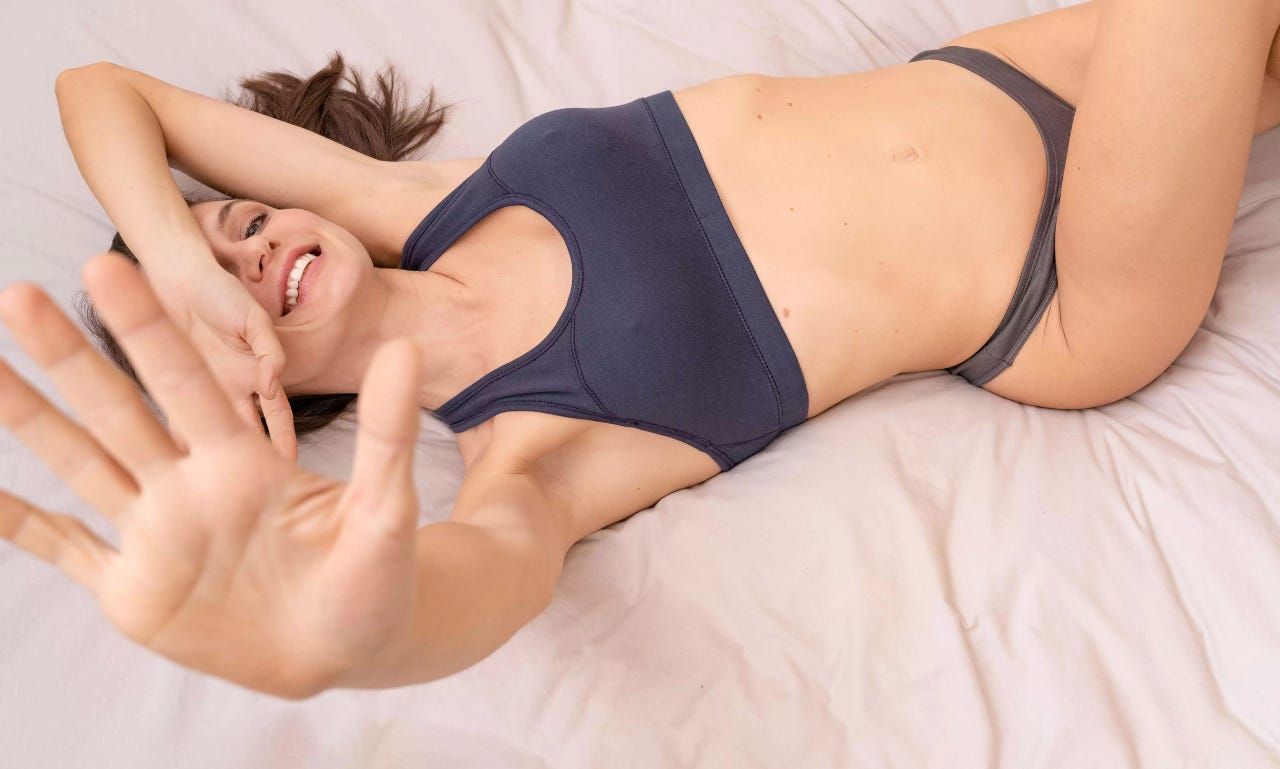
Now, there are always exceptions. Pansy makes 100% organic cotton undies, and those models really earn their fee making them look sexy even when they’re wrinkling up. Aya does 100% natural items, and their cotton thong does look mighty tempting, though the sports bra seems to gently cradle the girls, instead of strapping them in for the ride.
Cottonique and Julie May achieve 100% natural fibers in their underwear and bras by doing a medical wrap crossed with granny panties. Arms of Andes sells what it calls “slipper socks.”
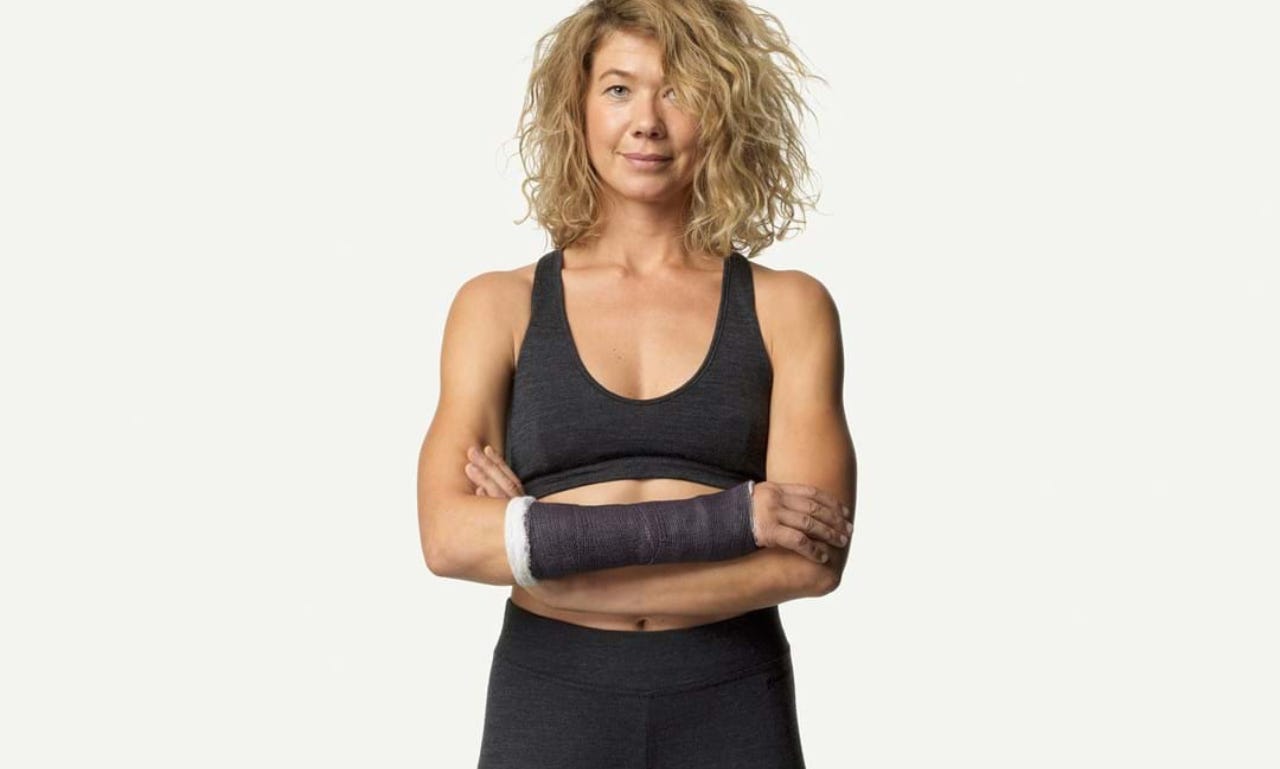
One alternative for mild stretch is using a knit fabric instead of a weave, and I’ve been wanting to try ChosenWoven’s merino knit mesh underwear and bralette as an alternative to synthetic bathing suits. Houdini’s sports bra, made with merino wool and lyocell, achieves a mild stretch, but again, it’s not tight to the chest.
Some brands use Roica compostable elastane, but as we’ve seen, those claims to biodegradability are suspect, and just because something is compostable, doesn’t mean it’s not toxic.
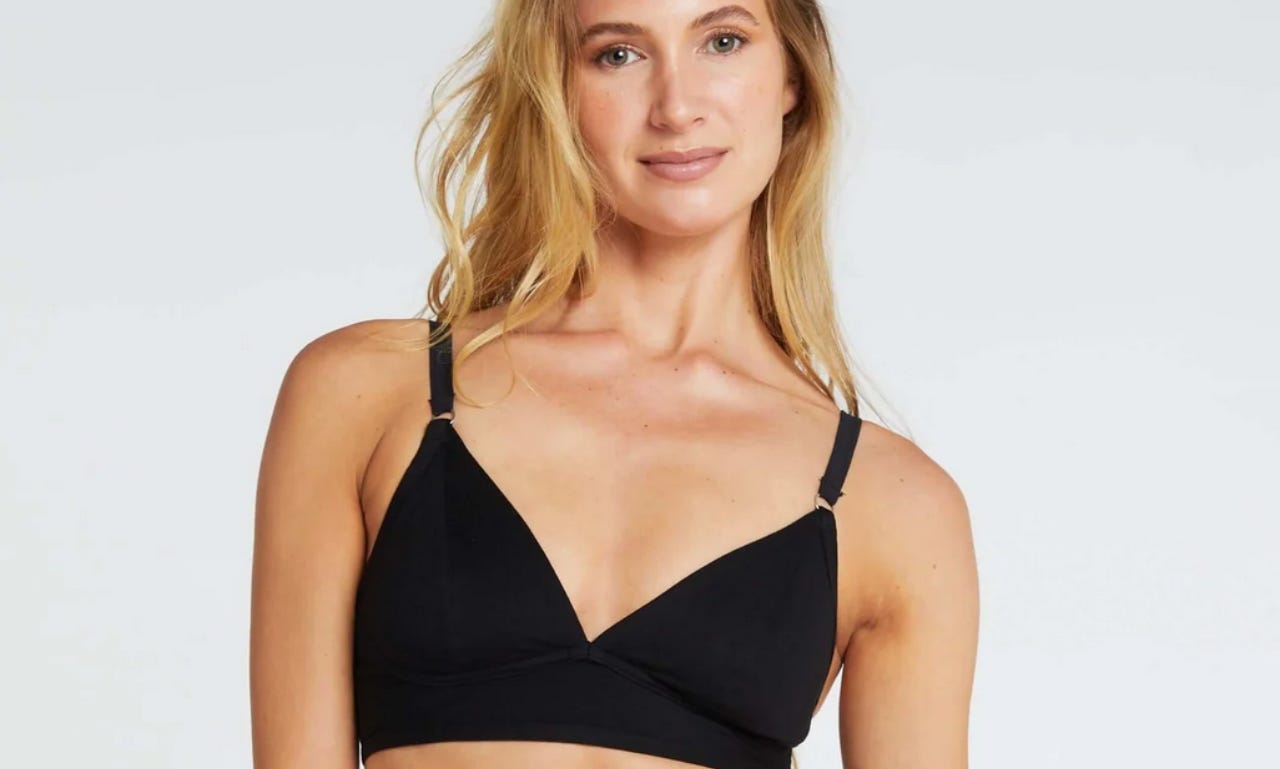
Others – Aya, The Very Good Bra, Sustain by Kat, and ChosenWoven – use a bit of natural rubber stretch, which seems to be the better option (unless, of course, you’re allergic to latex!)
So, is this the end of the world for us natural girlies? Nah.
I mean, yes. If you are exceptionally sensitive to synthetics at any amount, you’re going to have to get used to yoga leggings that bunch. (Or go full hippie and get Buddha Pants, which have the added benefit of staving off catcalls if you’re walking to the yoga studio. Ask me how I know.)
But for most, a little bit of stretch doesn’t cause a reaction, even for those who have sensitive skin. So do what feels right for you!
What’s your experience with stretchy basics? Have you tried the above brands? Are there ones we’re missing? Help the community out!
Good Reads
Old house lovers! Danielle Keperling of Keperling Preservation Services had me on her podcast Practical Preservation to discuss spray foam insulation, flammable plastics and flame retardants, and more.
A nice little think piece I vibe with: If you were rich, would you fold laundry?
Hey y’all, in case you hadn’t thought of this, don’t use synthetic tea bags, especially those “fancy” pyramid ones. The science is scary. Here’s a petition you can sign to urge tea companies to stop using plastic.
We have a lot more really good reading this week for paid EcoCult members!