
Conventional Cotton Is Fine.
Influencers are spreading false information about pesticides and fear-mongering about non-organic cotton products.

Hey readers,
I got a very thoughtful question from the founder of a small sustainable kid’s brand recently, and I wanted to share it with you:
Something keeps coming up and I haven’t been able to find any credible research on it. I have always felt that organic cotton is of course better, but for those who can’t find or afford organic cotton, conventional cotton is a better option than polyester—especially if the cotton has Oeko-Tex certification. It seems like there is a push on social media to say that conventional cotton should not be considered a better option at all because it’s so bad ... but they place a large part of the argument on pesticides. I know that there are many different chemicals used for dyeing and for creating cotton clothing/textiles that are harmful, but specifically in regards to pesticides; is there research that has been done on conventional cotton that has shown that pesticides used during the growing of cotton remains on the fiber long-term?
This came in the week the USDA launched a MAHA-based campaign to promote American cotton and American-made clothing. The campaign includes cotton farm subsidies, support for domestic manufacturing, trade policies promoting the export of cotton, and a marketing campaign called “plant, not plastic.” But influencers were saying this is actually a ruse by the chemical industry to promote pesticide products.
Yikes…if it’s true.
Does Conventional Cotton Clothing Have Pesticide Residue?
I have been exploring this question since the very beginning of my career writing about sustainable fashion. In fact, when I started scouring the internet—again—for fresh research, one of the only things I found was an article I wrote in 2014 on this topic. 2014!!
The context for that article: A celebrity had written an article for Refinery29 about sustainable fashion. There were some inaccurate stats in there about cotton and pesticides. So Cotton Inc., which represents American farmers and cotton importers, asked Refinery29 if they would do a follow-up, and in turn Refinery29 asked me to interview one of their cotton scientists.
It’s a wild ride, reading it now. The scientist claimed glyphosate is “one of the safest herbicides, if you’re an animal.” Glyphosate has since become a flash point in a battle to protect consumers from its health effects, with the EPA ruling that it is safe, (contrary to the EU’s view of it), thousands of customers suing Monsanto and winning, a recent Supreme Court ruling making it impossible for consumers to sue Monsanto/Bayer, and several representatives proposing laws that would override that ruling.
So far, so bad. But after we talked about Roundup resistance, we moved on to whether consumers are exposed to pesticides like glyphosate when they wear non-organic cotton clothing. Here’s what he said:
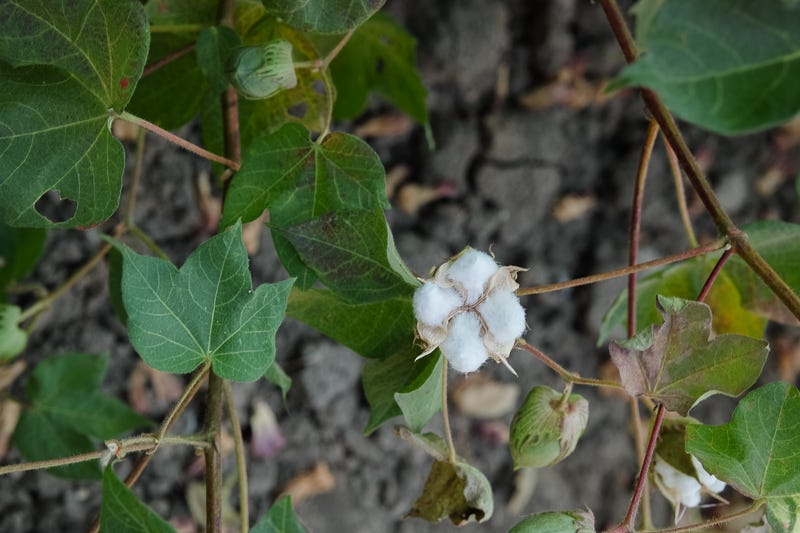
“Most of the time the cotton plant is growing, the fiber is inside a boll [the rounded seed capsule]. The insecticides are applied before the boll opens. Most fibers are never exposed to those chemistries. Any chemistries that did get on the fiber, then you have textile processing. If there’s any wet processing, any residuals would be washed off. The Bremen Cotton Exchange takes raw fiber bales — cotton taken straight from the gin — from cotton from around the world. More than 90% of the time, even before the wet processing, there [are] no residues detected. The probability of any of that making it to a consumer product is about as close to 0% as you can get.”
Did I believe him? Kind of. That 10% of raw cotton fiber bales that did have pesticides on them concerned me. I then started discussing acceptable amounts of risk, and reading Baby Journalist Alden’s words, I’m really proud of her. Usually, I’m embarrassed by my old writing, but in this article I can see the seeds for To Dye For starting to germinate. I was already thinking deeply a decade before about how the concerns of consumers are brushed aside by telling them that a certain amount of exposure to toxic chemicals is perfectly fine.
So when I started thinking about writing this book on toxic fashion, I looked into this topic of agricultural pesticides on cotton clothing again. And I couldn’t find anything.
Someone tweeted me a study that they said showed pesticide residue in finished cotton clothing, but it was actually a paper exploring testing methods for finding trace amounts of pesticides on cotton textiles. Even today, when I looked through the research, that is all I could find: testing methods. But not the actual results of tests of regular clothing showing pesticide residue.
What the Testing Shows
I emailed a few experts and researchers, and Nate Sponsler, Director of AFIRM, got back to me. If you’ve read my book, you might recognize the name AFIRM. It’s a membership organization of apparel and footwear companies that collaborate to create a restricted substance list (RSL) and provide guidance to brands on testing for hazardous chemicals and keeping them out of clothing. Nate has participated in AFIRM for 20 years, including nine years as a brand member at Gap.
First, he explained that when looking at an RSL for product testing, pesticides fall into the chemical class “biocides”: substances that are used to kill or prevent insects, mold, or bacterial decomposition that can harm fashion products. This includes agricultural pesticides, preservatives, antimicrobials, fungicides, and more.
“Agricultural pesticides are included in the AFIRM RSL in Appendix C, but we do not recommend testing for them in any materials because they are never found,” he wrote in an email. (Emphasis mine.) “Occasionally, some AFIRM member brands test for them, but they never find any.”
“With respect to agricultural pesticides used in cotton farming generally, I would say the risk of finding them in finished garments is incredibly low to basically nonexistent. Whatever pesticides may have been used in the fields and potentially retained in cotton fibers are washed out during the many wet-processing stages involved in producing cotton garments,” including “processing the cotton into yarns and fabrics, pretreatment, dyeing, laundering, etc.”
“With all the washing that take place, I don’t even think there are meaningful differences between organic and inorganic cotton with respective pesticide residues. They just are not there in measurable concentrations.”
So, just to sum it up:
Agricultural pesticides are never found in organic or conventional cotton textiles. When it comes to pesticide exposure, purchasing organic cotton does not mean you are safer. If you’re on a budget and your main concern is your and your family’s health and safety, purchasing conventional cotton products is perfectly acceptable.
Why Pay More for Organic Cotton?
This is a question I’m increasingly hard-pressed to answer. Paying a few bucks more for an organic shirt used to feel like a guarantee that cotton farmers from India, Turkey, Brazil, Texas and North Carolina weren’t using pesticides, and that the garment as it moved through the supply chain would be free of hazardous chemicals, only using “organic” dyes and finishes.
But my faith in the GOTS Organic certification (the only organic textile certification) has broken down in recent years.
First, my investigation into fraudulent organic cotton from India made me feel like my extra dollars aren’t going to farmers (at least in India) and that buying organic wasn’t reducing farmer exposure to pesticides.
Then, I found out an an OG certified organic brand had started smelling like chemicals and causing reactions in several people, including a dear friend.
Finally, I found out that organic certification for dye houses is incredibly weak and easily gamed. The chemicals that are allowed aren’t organic plant dyes, they’re just petrochemical dyes that are supposed to be safer. But nobody from GOTS is really checking that a certified dye house is using those chemicals it said it would.
So, do I prefer organic cotton? No, not by itself. That’s because the main concern for cotton clothing is all the dyes and finishes that are applied long after it is harvested. So I prefer 100% natural clothing from brands that do several things to ensure they are safe and non-toxic. Organic certification can be one of several things indicating care, but it can’t be the only thing. I look for a brand that sources its dyed cotton textiles from the U.S. or Europe, that has Oeko-Tex certification, that is part of Afirm, or just has a strong chemical management program in general.
I’m also very aware of what pesticides are doing to conventional farmers in the U.S., their neighbors, pollinators and other beneficial bugs, birds, and the longterm health of our soil. So I am very happy to pay more for clothing from brands that source from American organic cotton farmers. That’s a much stronger system that I trust from beginning to end, and a brand that sources American cotton is showing a real commitment to its supply chain and farmers.
Here is a list of top-tier non-toxic brands, many of which source American organic cotton.
Here is a list of affordable, second-tier non-toxic brands, many of which sell certified safe organic and conventional cotton products.
So in conclusion, I will say with so much confidence:
If you want to support organic American cotton farmers, and can afford to, great. But you don’t need to spend a ton on organic cotton clothing.
AND
Conventional cotton clothing or bedding from a conventional brand is still better for your health than synthetic clothing.
As I wrote to the small brand owner who started me down this path:
“‘They’re saying on social media’ is almost never the precursor to a helpful or accurate statement.” Luckily, she agreed.

Sorry for the length of this comment!
You are too hasty in concluding that conventional cotton in apparel is not a concern.
There are two general types of pesticides used on cotton: surface pesticides and systemic pesticides. Surface pesticides do mostly - but not reliably entirely - wash out. Systemic do not. And these systemic pesticides are really bad actors: neonicotinoids, imidacloprid, thiamethoxam, and some organophosphates (Some organophosphates are surface pesticides). Systemics are absorbed into the plant's tissues and move through it. These don't wash off because they're inside the plant, not just on the surface. (More of the specific science on this below.)
It is true that cotton fiber goes through a lot of wet processing to become fabric; but the pesticide residue in finished fabric is NOT zero.
How do I know? I know for absolutely certain. Let me get to that in a second.
But above all, please do NOT disregard all of those washed out pesticides. They wash out into water bodies, and raise havoc with the local - and the distant - flora and fauna. There is not a no-peeing part of the swimming pool. I think of my sister’s and my work as being pro- health and safety, but primarily I think of our work as saving the Earth’s animals and plants. You might wash off the majority of the toxic chemicals used to produce your fabric, but they do not magically dissipate. They remain to wreak havoc with the Earth’s living things - and, eventually, you again. Or maybe you remain healthy but we lose animals and plants. Not the Earth want. The tonnage is great: The toxicity not trivial.
In 2001 the first 82 of what have become 180 countries of the world (NOT including the USA) got together and signed The Stockholm Convention, the agreement to stop producing and using the worst of the worst human made (synthetic) chemicals. Pesticides were 9 of the first 12 chemicals chosen in 2004, the “dirty dozen” chosen because they are POPs - Persistent Organic Pollutants which are supremely toxic to living things, are persistent - meaning you and the Earth will be living with this chemical for many many years as its half life is so long; they bioaccumulate, meaning that they build up in the fatty tissue of living organisms and concentrate as they move up the food chain (biomagnification); and they have “Long-Range Environmental Transport” meaning that they easily travel vast distances across international boundaries via air, water, and migratory species - up the food chain, etc..
Even if the pesticides used in your conventional cotton do wash out, they do not disappear. They become the problem of animals, plants, other humans; and, eventually, you again. You cover this fact very lightly. But a total re-frame is needed if we are to save species and the planet - and ourselves.
But back to how do I know. My sister in the late 1990’s got the hair-brained idea to produce fabric without the intense onslaught of water, chemicals, and energy. Although both Oeko-Tex 100 and the World Wide Web were introduced in 1992-1993, we did not hear of it until after we had finished years of doing exactly what Oeko-Tex had done - list the chemicals used in fabric production, determine their toxicity, and find alternatives for the bad actors. You can now just go and download the lists of chemicals prohibited or limited by Oeko-Tex 100 and by GOTS (Use GOTS as it is MUCH stricter.). We ran a zillion toxicity tests over several years, among them, conventional cotton fabric toxicity testing. The residues were low, but never non-detectible. Sadly, my sister entered memory care early five years ago, and I have been unable to locate the early tests, which she managed. I will contact the labs. BTW, it’s not hard to do. Just run the test on the final fabric. It’s not research. It’s testing. The tests have to be run with sufficiently competent equipment and labs that they can detect reliably concentrations that are super minute.
But don’t rely on me. There are research studies which show that pesticides remain in cotton finished products. I’m not sure why you could not find these:
My sister, Leigh Anne, was especially disturbed by a Chinese study published in 2007, which she had to have translated:
Zhang, X., Liao, Q and Zhang, Y, “Simultaneous determination of nine organochlorine pesticide residues in textile by high performance liquid chromatography, SEPU, 2007, 25(3), 380-383.
These were finished wet processed fabrics that contained residues of concern at levels of concern.
Leigh reported this in our blog in 2011: a blog that is relevant: https://oecotextiles.blog/2011/05/19/pesticide-residues-in-cotton-fibers/#_ftnref3
Organochlorines are persistent and lipophilic, which is exactly why they're the class most often detected in finished fabric.Lipophilic ("fat-loving") refers to a substance’s chemical ability to dissolve in fats, oil, lipids and non-polar solvents. This is important because cotton cell membranes (and our cell membranes, too) are made of fatty lipids. Lipophilic molecules like many of the systemic pesticides easily cross these cell membranes. Cells membranes are hydrophobic (water repelling) and lipophilic - meaning they repel water and attract fats. Pesticides get in the cells and the water does not wash them off.
A study in 2017 of finished products sold in Egypt found ( https://www.curresweb.com/mejas/mejas/2017/102-109.pdf ) lots of pesticide residues in numerous finished cotton products, some of them wet processed . 14 different pesticides were detected in 20 samples in the concentration range from 0.01 to0.416 mg/kg for the detected pesticides. Chlorpyrifos, Malathion, Profenofos, Cypermethrin, Acetamiprid, Chlorfluazuron, Lufenuron, Cyhalothrin-Lambada, Tricyclazole, Bifenthrin, Flonicamid, Hexachlorobenzene, Methomyl and Piperonyl butoxide.
It has only been recently, in 2025, that a method for reliably measuring all of the common pesticides, herbicides and defoliants used on cotton was even invented.
And remember, we are talking about whether the tiny residues of pesticides in conventional cotton fabric pose a threat to your health. The fact that the residues are very low should not be a comfort. I don’t remember the cotton pesticide toxicity details; but I have recently re-read studies on certain phthalates. This class is potent in concentrations of a trillion to one. Toxicity is a complicated subject (Some chemicals have a toxicity profile in which they are toxic at small concentrations and large concentrations but less so at middle concentrations.); but a trillion to one is exceedingly small. Even the not aggressive US EPA states “Many toxic chemicals (such as PFAS, dioxins, or certain pesticides) pose health risks at levels much lower than 1 part per billion. Regulatory bodies often set drinking water or environmental safety limits in the low parts-per-billion range.” (https://www.epa.gov/risk/regional-guidance-handling-chemical-concentration-data-near-detection-limit-risk-assessments ) My point here is that Leigh Anne and I have been stunned continually by how the teeniest, tiniest amounts of a substance can trigger a horrible result.
The Oeko-Tex body also disagrees with you. They just introduced their own cotton specific organic standard, because we and others have been pointing out for literally decades that an Oeko-Tex 100 certified cotton fabric is not necessarily safe to use. So even Oeko-Tex (and their technical partner, the Hohenstein Institute) would agree that you want a fabric that is both Oeko-Tex 100 certified AND, if cotton, certified to the Oeko-Tex Organic Cotton Standard.
This is the last current huge black eye for Oeko-Tex 100. We argued with them for literally decades again about PFAs and their millions of cousins. Oeko-Tex 100 certified fabrics containing PFAs and any other forever chemical class until May, 2023. Stunning. There are still Oeko-Tex 100 certified products out there that contain gobs of PFAs, especially in interiors (upholstery and drapery).
You denigrate GOTS because of the extensive GOTS fraud in India and Pakistan, its cost, and the ease of continued fraud. We were likewise disheartened (too tame a word) by the fraud. But GOTS is so very much stricter and much more comprehensive than any other standard. It is much more likely that there is fraud in Oeko-Tex than in GOTS. GOTS audits and performs surprise audits. GOTS issues certificates that accompany shipments all along the chain. Oeko-Tex issues for its standard 100 one number that says that this producer using this type of fiber on this type of product is good. The possibility for fraud is rampant. AFIRM does no audits and conducts no tests. AFIRM’s RSL is better than most second party certifications because they are trying to help members sell products in other countries - especially Europe- which outlaws now over 200 chemicals in products. The US was at a grand total of 9 but I think 5 have been restored to anybody can use anytime. But there is no assurance of compliance. This is a solvable problem for GOTS. We have hired Able Ecosystems, a company with an extensive network of textile professionals, to verify all claims. They visit our suppliers frequently. Yes, it increases the cost. That’s a big problem. (
Lots of issues. The biggest one being we as consumers are powerful. If we keep buying conventional cotton clothing, the dire consequences of conventional cotton agriculture will haunt us if we survive. The presence of a multitude chemicals found in mother’s milk and in our bodies and the presence of micro-plastics in our internal organs is not due only to the clothing on your body or the fabric near you.